Climate Change in Cumberland
This page was last reviewed on April 24, 2026.
In the Village of Cumberland, the effects of the changing climate are evident through increasing frequency and intensity of extreme heat, extreme precipitation, drought, and wildfire. These changes have potentially significant impacts on people, infrastructure, and natural systems, and are anticipated to worsen over time.
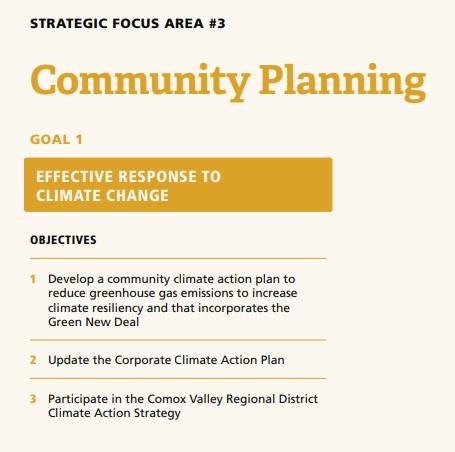
Village of Cumberland Council has outlined their commitment to addressing climate change within their strategic priorities
Climate Action in Cumberland
Since signing onto the BC Climate Action Charter in 2010, the Village of Cumberland has been committed to reducing emissions and building resilience. This commitment is embedded in the Official Community Plan through climate change mitigation and adaptation goals and actions. The Village’s 2013 Climate Action Plan represented a significant first step towards defining actions to reduce carbon emissions and build resilience in the face of climate change. Since the development of this foundational plan, the Village has been working hard to consider climate change across all Village projects and decisions, both large and small.
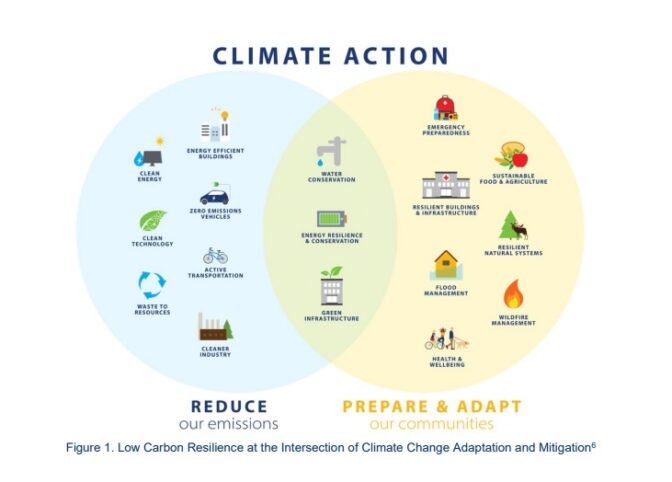
The Climate Action Plan indicates ways in which the Village of Cumberland will respond to the
impacts of climate change by building low-carbon resilience. It leverages the foundational work of the Village’s 2013 Corporate Climate Action Plan, updates corporate and community emissions targets, and proposes adaptation and resilience measures for the community as a whole.
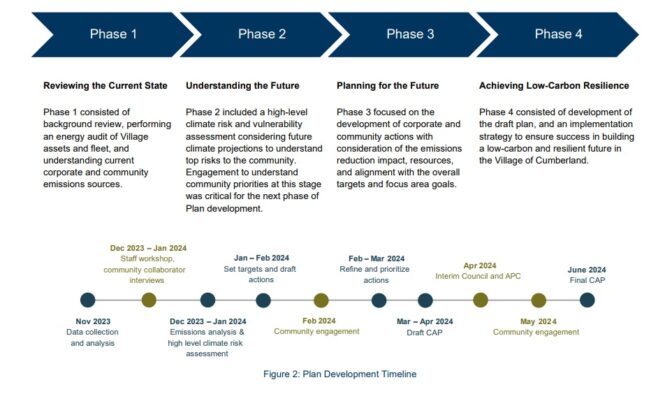
Plan Development
The Climate Action Plan development process involved strong community engagement from the public, key stakeholders and local groups, Village staff and Village Council.
Cumberland’s Plan
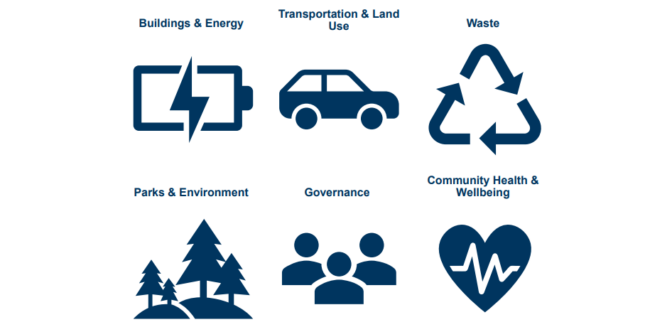
The plan is structured according to six focus areas with goals and actions to streamline the Village’s plans for building low-carbon resilience. Each focus area includes current emissions sources, goals to guide the actions including what full implementation would look like by 2030, and a summary of the relative emissions reductions and level of impact of the actions under each of the goals.
Implementation
Coordinated implementation is crucial for achieving the Climate Action Plan’s goals and targets. Implementation will require involvement from all departments and the strategic integration of Plan actions into various policies and processes, including capital planning and budget approvals. While the Village takes primary responsibility for Plan implementation, partnerships with regional, provincial, and federal governments, as well as
collaboration with utilities, transit authorities, indigenous communities, educational institutions, and local organizations, are essential.
Monitoring and Evaluation
Regularly reviewing emissions reduction achievements and the outcomes of actions in this plan is essential to maintain the success of the Climate Action Plan and to ensure the Plan remains a consistently relevant resource. Approaches for monitoring and evaluation of Plan actions include:
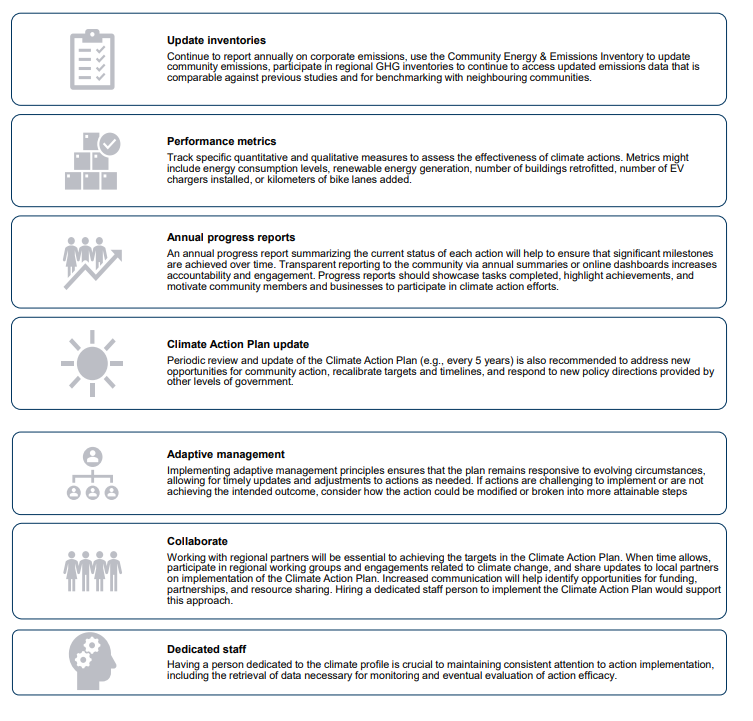
A Collective Approach to Low Carbon Resilience
While mitigation efforts focus on reducing GHG emissions to limit further climate change, adaptation actions are also necessary to address the unavoidable impacts that are already occurring and are expected to worsen in the future. By integrating adaptation strategies, such as improving infrastructure resilience and enhancing natural ecosystems, with mitigation initiatives like transitioning to renewable energy and reducing energy consumption, Cumberland can better withstand the effects of climate change and work towards low carbon resilience. This holistic approach ensures that efforts to mitigate climate change also contribute to enhancing adaptive capacity, ultimately leading to more effective outcomes. The Village of Cumberland recognizes that achieving emissions reduction targets cannot be accomplished in isolation. Partnerships with various stakeholders, including neighboring municipalities and First Nations, Comox Valley Regional District, utility companies, local industry and businesses, community organizations, and other levels of government will be essential. Collaborative efforts will facilitate the sharing of resources, expertise, and innovative solutions, enabling the Village to leverage collective strengths and address emissions challenges more effectively. By fostering partnerships, the Village of Cumberland can harness the collective commitment and action necessary to achieve its emissions reduction goals and create a climate-ready future for all involved.

Public Works’ new E-truck

You can read the full version of the Climate Action Plan here Cumberland_CAP_Final.pdf
Please follow along as we update this page with actions the Village is taking to combat climate change.
Search again